Block Stranding is an on-chain multiplayer role-playing game (OMRPG) built on the Solana blockchain, offering a real-time, isometric 2D universe where players assume the roles of astronauts. In this expansive world, players can gather resources, craft items, build bases, and engage in player-versus-player (PvP) combat. The game leverages the MagicBlock real-time engine, enabling all in-game actions to be executed on-chain with zero transaction fees and ultra-low latency. **On-Chain Gameplay:** Every action in Block Stranding, from crafting to combat, is recorded directly on the blockchain, ensuring transparency, security, and true ownership of in-game assets. This means players have complete control and ownership over their items, bases, and progress, with all transactions verified on-chain. **Zero Fees & Ultra-Low Latency:** Utilizing Solana's high throughput and the MagicBlock engine, the game offers real-time responsiveness with transaction processing times around 10 milliseconds. This eliminates the barrier of transaction fees that plague many blockchain games, making Block Stranding accessible to all players regardless of their budget. **Procedurally Generated World:** Players navigate a vast, procedurally generated 2D sandbox composed of interconnected biomes accessed through portals. This ensures a unique experience for each player, with endless exploration opportunities and dynamic environments that keep gameplay fresh and engaging. **Core Gameplay Features:** - **Exploration:** Discover new biomes and areas through portal systems - **Resource Gathering:** Collect materials from the environment to use in crafting - **Crafting System:** Create weapons, armor, tools, and other items from gathered resources - **Base Building:** Construct and customize your own bases for storage and defense - **PvP Combat:** Engage in player-versus-player battles with other astronauts - **Mission System:** Complete missions to earn rewards and progress **NFT Integration:** In-game assets such as weapons, armor, and skins are represented as tradable and upgradeable NFTs. This allows players to truly own their items and trade them on secondary markets, creating a vibrant economy around the game. **Tokenomics - $STRAND Token:** Block Stranding's economy revolves around its native token, $STRAND, which serves multiple purposes: - **Gameplay Rewards:** Players earn tokens through missions, victories, and loot drops - **NFT Items:** Used to purchase, upgrade, and trade in-game NFT assets - **Governance:** Token and NFT holders have voting rights on game updates, new zones, and events, fostering a decentralized decision-making process **Season 1: Attention Mining Mission:** Block Stranding launched its first season featuring an "Attention Mining Mission" where players can earn $STRAND tokens by engaging with the game on social media platforms like X (formerly Twitter). This campaign encourages community participation and content creation, rewarding players for spreading awareness about the game. **Technical Achievements:** Prior to the launch of Season 1, Block Stranding successfully completed a large-scale multiplayer stress test using AI agents. The game processed over 200,000 transactions in a single session, demonstrating the robustness of Solana's parallel processing capabilities and the efficiency of the MagicBlock engine. This achievement showcases the game's ability to handle massive multiplayer scenarios with minimal latency. **MagicBlock Integration:** The game utilizes the MagicBlock real-time engine, which is specifically designed for on-chain gaming. This technology ensures that all game actions are executed on-chain while maintaining the responsiveness and feel of traditional games, bridging the gap between Web2 and Web3 gaming experiences.
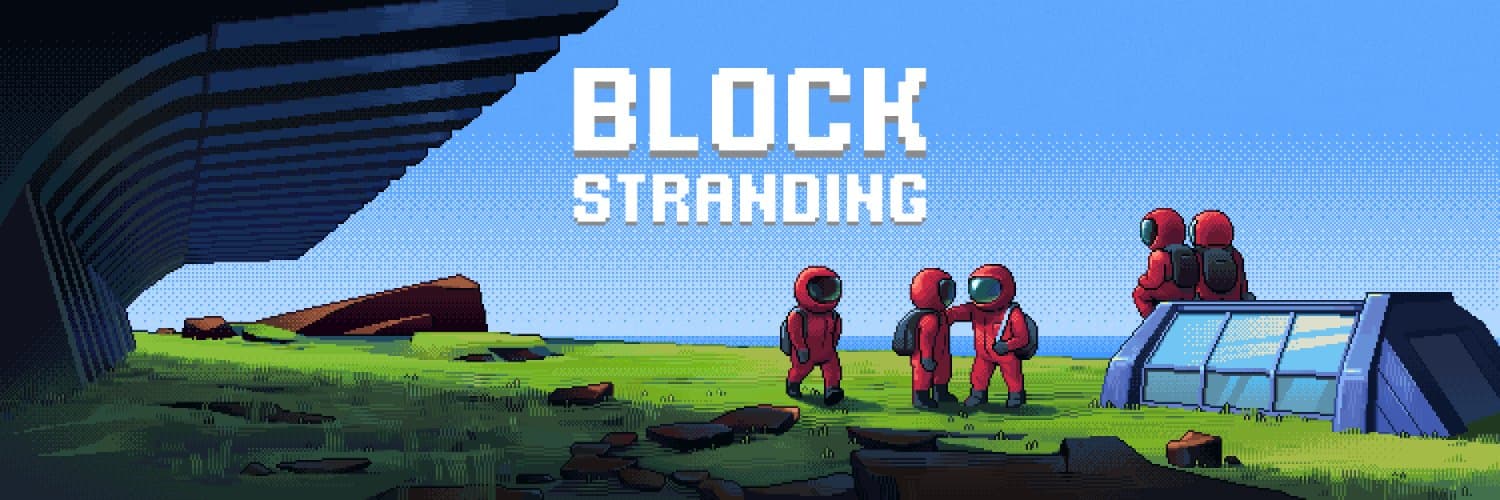
An on-chain multiplayer role-playing game (OMRPG) built on Solana. Explore a procedurally generated 2D isometric universe as an astronaut, gather resources, craft items, build bases, and engage in PvP combat with zero fees and ultra-low latency.
Block Stranding Studios
Visit WebsiteCategories
Tags
Platforms
Controller Support
Features